THCA vs THC: What’s Actually Different (and Why It Stops Mattering the Second You Light Up)
Here’s the dirty little secret of the THCA boom: the stuff in the jar and the stuff in your lungs aren’t the same molecule. Not by a long shot. Understanding that one flip is the whole ballgame, so let’s clear the smoke.
THCA is the plant’s raw form. THC is what heat makes of it.
Living cannabis doesn’t really make THC. It makes THCA, tetrahydrocannabinolic acid, a bulkier cousin carrying an extra chunk chemists call a carboxyl group. That extra piece keeps THCA from fitting neatly into the CB1 receptors in your brain, which is why chewing a raw bud does basically nothing for your head.
Add heat (a lighter, a vape coil, a banger at dab temp) and that carboxyl group pops off. Scientists call it decarboxylation. What’s left behind is delta-9 THC, the same compound that has powered every session since forever. Flame on, THCA out, THC in.
So does THCA flower hit like regular weed?
Once it’s lit, yes. That’s the part people dance around. Decarbed THCA is delta-9 THC. Your body doesn’t care what the label said before you hit it. Strain, terpene profile, freshness and how much actually converts are what change the ride, not the acronym.
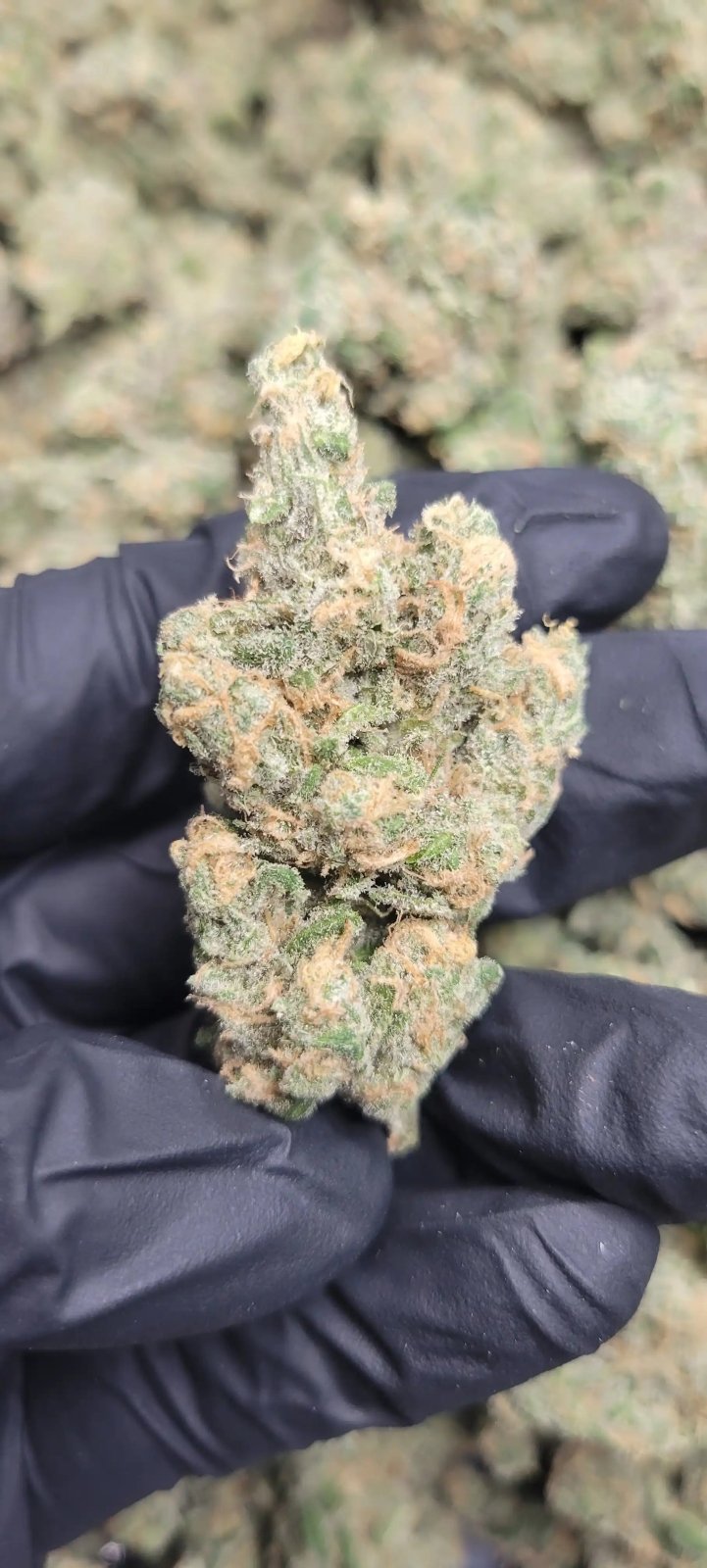
That’s also why quality matters so much here. A slab of 30% THCA indoor that was dried and cured right will smoke nothing like dusty, over-dried shake that tested high once in a lab six months ago. Grade is real. It’s why we split our flower into Indoor Exotic and Indoor Top Shelf, priced and labeled so you know exactly which tier you’re getting.
The math every label is quietly doing: total THC
Because THCA loses weight when it converts, you can’t just read the THCA number and call it a day. Labs use a standard formula:
Total THC = Delta-9 THC + (THCA × 0.877)
That 0.877 is the weight THCA keeps after the carboxyl group leaves. Run it on a real example: flower testing 28% THCA and 0.2% delta-9 works out to roughly 24.8% total THC once heated. That’s your honest potency number. Want to see it on an actual lab sheet? Every batch we sell has its report posted on our lab results page.
THCA vs delta-9 vs delta-8, in one breath
- THCA: the raw acid in the plant. Not intoxicating until heated.
- Delta-9 THC: what THCA becomes. The classic high.
- Delta-8 THC: a different arrangement of the same atoms, usually made in a lab from CBD and generally milder. Not something THCA turns into.
Why the label ever mattered: the law
For years, federal hemp rules only counted delta-9 THC on a dry-weight basis, not THCA. That gap is how high-THCA hemp flower reached shelves and doorsteps nationwide. Congress has since rewritten the definition to count total THC, THCA included, starting December 11, 2026. We broke down what that means in plain English in our hemp ban explainer.
Drug tests: no loophole here
If you’re tested, THCA won’t save you. Once you smoke or vape it, your body processes it like any other THC, and standard panels look for the same metabolite. Our full rundown lives in Does THCA Show Up on a Drug Test?
Quick answers
Does THCA get you high?
Not raw. Heated, most of it becomes delta-9 THC, and that’s what gets you high.
Is THCA stronger than THC?
No. It becomes about 87.7% of its weight in THC. Same molecule, slightly smaller number.
What’s the best way to use THCA?
Anything with heat: a joint, a dry-herb vape, or a dab for diamonds and live rosin.
21+ only. This article is general information, not legal or medical advice. Check your state and local laws before you buy.
Shop best sellers