

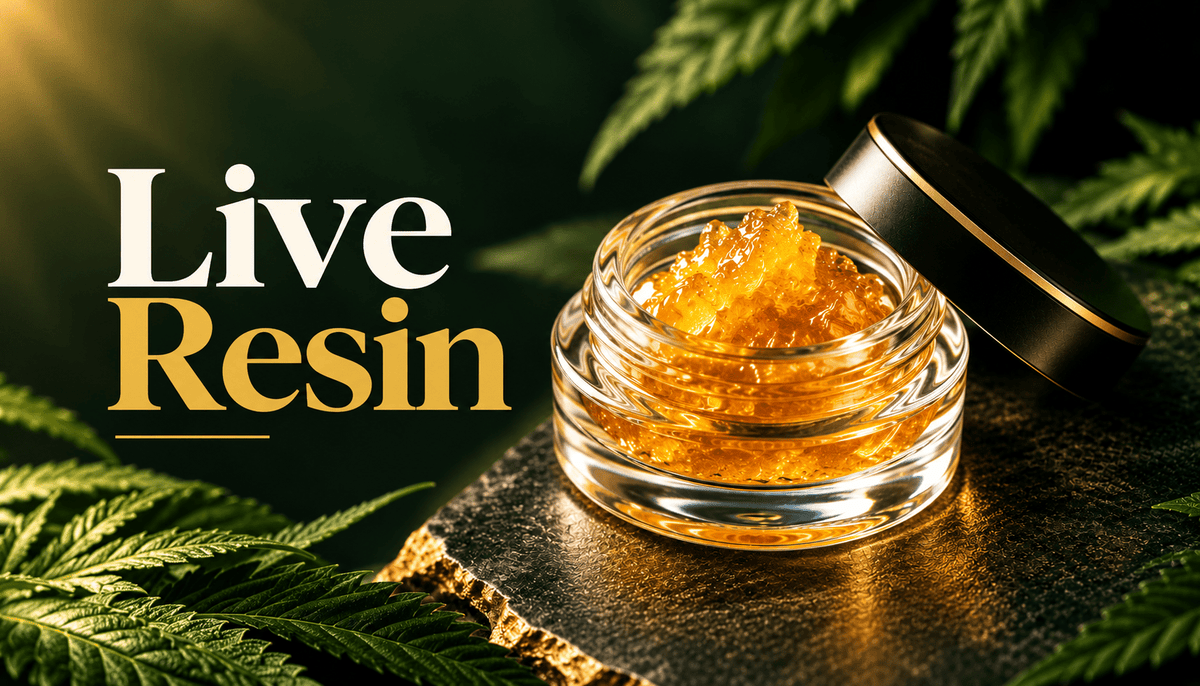
Live resin is a cannabis concentrate made from plants that are frozen right after harvest instead of being dried and cured. Freezing locks in the plant's terpenes, the aromatic compounds behind its smell and flavor. The result tastes and smells much closer to the living plant than concentrates made from dried material.
Think of it like fresh basil versus the dried basil in a jar. Same plant, very different flavor. That gap is what live resin is built around.
How Live Resin Is Made
1. Harvest and flash-freeze
Growers cut the plants and freeze them within hours, usually well below 0°F. Normal processing hangs plants to dry and cure for one to several weeks, and a big share of the more volatile terpenes evaporate during that time. Freezing skips that step.
2. Hydrocarbon extraction
The frozen material goes into a closed-loop extractor. A chilled liquid solvent, usually butane, propane, or a blend of the two, washes over the plant matter and dissolves the cannabinoids and terpenes. Cold temperatures help keep unwanted fats and waxes out of the extract.
3. Purging
The solvent is then removed from the extract using gentle heat and a vacuum oven. A properly purged product should show residual solvents within the limits on its Certificate of Analysis (COA). This is one of the most important things to check on any hydrocarbon concentrate.
4. Finishing
How the extract is handled after purging decides its final texture. The same starting material can become sauce, sugar, badder, or diamonds.
Live Resin Textures
- Sauce: A runny, terpene-heavy liquid, often with THCA crystals suspended in it.
- Sugar: Small crystals in a sticky extract, with a texture like wet sugar. Shop THCA live resin sugar.
- Badder: Whipped during purging into a soft, creamy consistency like cake frosting. Shop THCA live resin badder.
- Diamonds: Large THCA crystals separated out of the sauce, usually sold with some sauce for flavor. Shop THCA live resin diamonds.
- Liquid diamonds: Diamonds and sauce blended into an oil for vape and dispenser products. Shop THCA oils.
How Strong Is Live Resin?
Live resin concentrates commonly test somewhere between 60% and 90% total cannabinoids, and in THCA products most of that is THCA. The exact number depends on the strain, the batch, and the texture. Diamonds sit at the top of that range, while sauce and badder carry more terpenes and come in lower. The only number that counts is the one on the COA for the batch you're buying.
A note on THCA: in its raw form it isn't intoxicating, but heat converts it to THC. Dabbing and vaping both use heat, so treat every THCA concentrate as an intoxicating product.
Why the Flavor Is Different
Fresh-frozen plants hold onto monoterpenes like limonene, myrcene, and pinene that tend to fade during drying. That's why live resin often smells brighter and more like the strain in the jar. Some people believe cannabinoids and terpenes work together to shape the experience, an idea called the entourage effect. It's a popular theory, but research on it is still limited, so think of terpenes as mainly a flavor and aroma choice.
Live Resin vs. Live Rosin
The names are close, and both start with fresh-frozen plants. The difference is how the concentrate is pulled out.
- Live resin uses a hydrocarbon solvent, which is then purged out.
- Live rosin uses no solvent at all. The frozen plant is washed in ice water to make bubble hash, and the hash is pressed with heat and pressure to squeeze out the oil.
Rosin is slower and more expensive to make, which is why it usually costs more. Resin produces higher yields and a wider range of textures. Read more on our THCA live rosin page or shop THCA live rosin.
Live Resin vs. Cured Resin
Cured resin is made with the same extraction method, but from dried and cured plants instead of frozen ones. It's usually cheaper and more stable, with a flavor that's closer to smoked flower than to the fresh plant.
How to Store Live Resin
Keep it in an airtight glass or silicone container, somewhere cool and dark. Heat and light break down terpenes fast, and warm temperatures can change the texture. For longer storage, the fridge works. Let the container come to room temperature before opening it so moisture doesn't condense inside.
Know the Law Before You Order
Hemp law is changing. A federal law signed in November 2025 redefines hemp so that THCA counts toward the 0.3% total THC limit. Enforcement begins on December 11, 2026, and it could affect whether many THCA products can be sold. State laws vary and keep changing, and some states already restrict or ban THCA.
CaliGreenGold does not ship to Arkansas, California, Idaho, Indiana, Kansas, Kentucky, Louisiana, Minnesota, New Hampshire, Oregon, or Rhode Island. Check the laws where you live before you order.
Frequently Asked Questions
Is live resin stronger than regular concentrates?
Not necessarily. Live resin is mostly about flavor and aroma. Potency depends on the texture and the batch, so compare COAs instead of names.
Is there solvent left in live resin?
Properly made live resin is purged so that residual solvents fall below testing limits. Check the residual solvent section of the COA before you buy.
Which is better, live resin or live rosin?
It comes down to preference. Rosin is solventless and usually costs more. Resin offers more textures and often a lower price.
You can review our lab reports on the COA page.
You must be 21 or older to buy from CaliGreenGold. Keep all cannabis products away from children and pets. Never drive or operate machinery after using an intoxicating product. These statements have not been evaluated by the Food and Drug Administration, and these products are not intended to diagnose, treat, cure, or prevent any disease.
Share:
Sativa vs. Indica vs. Hybrid: What the Labels Actually Tell You
THCA Concentrates Explained: Badder, Diamonds, Sugar, and Isolate